Pages

Showing posts with label special events. Show all posts

Friday, June 7, 2013

7 Elements Of A Successful Fundraising Event

Every nonprofit wants a successful fundraising event but are they doing the right things to have one? According to one expert, this is not always the case.

During a recent international conference on fundraising, Vivian A. Smith of Liberty Quest Enterprises said that a diverse fund development program should include events, but urged organizations to incorporate them thoughtfully into their overall strategy. They should not, she said, be viewed as standalone initiatives used just to raise money.

To be successful, planners of an event must consider:
  • Event Purpose. Is it just money, new prospects, increasing public awareness, gaining attention or some other objective?
  • Prospective audience. Think of characteristics and demographics, as well as the size of the group and the kind of appeal that is appropriate.
  • Type of event. It should meet the goals and reach the target market. It should be mission focused. Is there competition?
  • Resources needed for the event. This includes staffing, leadership, volunteers, time, skills, budget and a contingency plan.
  • Cost per dollar raised. This includes both direct an indirect costs.
  • Evaluation. Think of event goals, net revenue, staff commitment and volunteer impact.
  • Outcome. This is not just dollars raised at the time of the event. It can also serve as an opportunity to build team spirit among volunteers and staff.

Thursday, May 23, 2013

5 "Murphy's Law" Scenarios For Your Special Event

Murphy's Law dictates that anything that can go wrong will go wrong. Veteran special event planners swear by this rule, which is why they are always prepared for the worst possible scenario for their events. Paranoid? Maybe, but you can't argue they aren't being careful enough.

Special events inherently have an element of risk involved, explained Organic Events Founder Marika Holmgren in “Nonprofit Management 101.” While she wrote that there is no foolproof way to predict what issues will arise, that doesn't mean planners shouldn't prepare for every single scenario possible.

Holmgren identified five of the most impactful worst-case scenarios and suggested reviewing these and others to identify what needs to be done in each case and how to reduce the risk and liability of the organization:

  • Event income or registration does not meet your goals, financial or otherwise;
  • Natural disasters (hurricane, earthquake, etc.);
  • Hotel strikes and boycotts;
  • A key team member or event planner leaves the project; or,
  • A keynote speakers falls through.

Tuesday, May 14, 2013

Nonprofit Galas Breaking Fundraising Records On West Coast

Nonprofit galas in the Bay Area are breaking all sorts of fundraising records this year, bringing hope that organizations could soon be returning to pre-recession fundraising levels.

A report in the San Francisco Business Times reveals that many San Francisco-based organizations are getting a big boost in revenue from their annual galas. For example, Meals on Wheels (MoW) raised almost $2.17 million for homebound seniors at its 26th annual Star Chefs and Vinters Gala in April. That amount was the most ever raised by the organization for that particular event. In total, it netted $300,000 more than last year's gala, as more than 1,000 guests showed up to sample a spread of food made by gourmet chefs.

MoW Executive Director Ashely McCumber told The Business Times that she believed the success of this year's gals stems from a couple of factors: Strong donor relationships and an increased confidence in the economy, as people are feeling more comfortable giving once again. He added that most of the money from the gala came from individuals while corporate donations remained the same. Around 200 businesses and individuals participated in the gala's live and silent auctions.

While Habitat for Humanity San Francisco has not yet had its annual gala, Executive Director Phillip Killbridge told The Business Times that he is confident it will also break fundraising records, especially after Coldwell Banker Residential Brokerage wrote the nonprofit a $25,000 check.

Are your nonprofit galas and special events seeing similar results? Let us know in our comments section.

You can read the full story in the San Francisco Business Times.

Tuesday, April 9, 2013

Making Event Day A Success

Special events require a lot of planning, which begins with creating a timeline listing all the things you need to accomplish leading up to event day. Once you reach that date, there’s no turning back from the fact that it’s time to have the event. But, are you ready for it?

Event day is the culmination of the weeks and months you have spent planning. All of that hard work will hopefully translate into a gorgeous, inspiring, and lucrative event. This can only happen, however, if the proper planning is done beforehand. In the book "Nonprofit Management 101," Marika Holmgren, founder of Organic Events, wrote that all event planners should follow five golden rules to ensure everything runs as smoothly as possible:

  • No Assumptions: It’s critical that everyone involved be crystal clear on how event day will flow, what their role is, and what all the key players will do
  • Start the Day with Nothing Left to Do: When you begin event day, there should be nothing on your list that could have been done the day, week, or month before.
  • The Curtain Rule: When you are out in front of guests, at the registration table, staffing the silent auction cash-out, or backstage with the master of ceremonies, you are in front of the “curtain,” where you must remain professional, composed, and gracious.
  • Remember That You Are Part of a Team: Remember that all team members need to be briefed, trained, and managed throughout the process.
  • Don’t Expect Perfection, but Do Expect Perfect Troubleshooting: Because of the nature of live events, you should anticipate glitches. When this happens, your team must be ready and able to deal with the snafu in  the most professional and efficient way possible.

Thursday, February 14, 2013

8 Negatives Of Annual Galas

There aren't many nonprofits that don't hold annual galas, and there aren't many nonprofit employees that actually enjoy preparing for them.

As was suggested in one of our recent LinkedIn discussion questions, some employees feel an obligation to attend their organization's annual gala even if it's not exactly the way they want to spend their evening. While they are a time-honored method of increasing awareness and raising money, some would argue they aren't really worth all the hoopla.

One person who holds that view is Steve Klingman, who wrote in his book "Fundraising Strategies for Community Colleges" that nonprofits should consider scrapping the gala altogether and replacing it with an annual fund campaign. While he acknowledges the positives of galas -- fundraising, showing the flag, cultivation, recognition, volunteer involvement and people having a good time -- he maintains those good aspects are overwhelmed by negatives:

  • A gala event has a low yield as a fundraising vehicle.
  •  A gala saps annual fund dollars. Rarely do event-driven programs coexist with robust annual fund dollars.
  • A gala pre-empts other fundraising efforts for a significant portion of the year.
  • When staff time is added in, net revenue is too low.
  • A gala focuses donor attention on the event rather than the mission.
  • A gala distracts volunteers from more beneficial involvement. Using them to make annual fund calls is much better use of their time.
  • Donors quickly forget a gala.
  • A gala is expensive to produce. The cost of such items as dinner, facility and balloons can easily eat up 50 percent of each ticket.

Thursday, January 24, 2013

Special Event Planning Rules

The concept of a special event is great: A night of fun and celebration partnered together with increased publicity and revenue for your organization. What's not to like? Nothing, really, except for the fact that it takes a lot of work just to plan the event.

This might not be a problem if your nonprofit already has a large number of volunteers at its disposal, but this isn't the case for all organizations. As Thomas Wolf wrote in his book, "Managing a Nonprofit Organization," agencies that fall into this category must come up with new plans to ensure their event runs as smoothly as possible.

Wolf laid out nine rules that will help make things more practical:

  • Set a dollar goal early and stick to it. Too many event planners get off course by confusing public relations functions with fundraising;
  • The secret of success is net income, not gross income. What counts is how much the organization has left over after all the expenses for the event have been paid;
  • Plan an event that people will enjoy. It is easier to get people to participate if the event itself is a drawing card as well as the organization sponsoring it;
  • Establish a committee with a strong chairperson to work on the event. The chair (or co-chairs) often determines the success of an event;
  • Exaggerate the number of volunteers and dollars you will need to make the event a success. It’s better to have too much help rather than too little;
  • Allow plenty of planning time. Things always seem to take longer than expected, and there should be plenty of margin for error;
  • Build in plenty of ancillary ways to pick up money in conjunction with the event;
  • Involve local merchants; and,
  • Attempt to find a type of event that works for the organization and stick to it for several years.

Thursday, December 13, 2012

12-12-12 Concert Rakes In Cash For Sandy Relief

Yesterday was a special day for a number of reasons. First, it's going to be a long time before we see a date, day, and year (12/12/12) like that again. More importantly, it was the date of the 12-12-12 Concert for Sandy Relief at Madison Square Garden in New York City.

Our editor-in-chief, Paul Clolery, was in attendance for the six-hour long show, and has a summary of the night's events on our website. The concert featured legendary performers including Bruce Springsteen, Bon Jovi, Billy Joel, Rolling Stones, and Sir Paul McCartney, in addition to contemporary artists like Kanye West, Chris Martin of Coldplay, and Alicia Keys, who closed out the night with a rendition of her hit song "Empire State of Mind" alongside McCartney.

Yet the big story of the night was money raised for Hurricane Sandy Relieft. Donations went to organizations serving victims of the storm through the Robin Hood Relief Fund. Before an act even took the stage, the concert raised $37 million. A final donation tally was not available as of this writing.

Individuals who called in through the night to make a contribution had the chance to speak to a host of celebrities who were working the call center. These included big names such as Adam Sandler, Ben Stiller, Whoopi Goldberg, Steve Buscemi, Naomi Campbell, Tony Danza, and James Gandolfini.

One of the highlights of the night came when McCartney, one of the last two surviving Beatles along with Ringo Starr, helped front a reunion of the '90s grunge band Nirvana. The band was headed by the late Kurt Cobain, and McCartney filled his role by performing a new song written by the surviving members of Nirvana called "Cut Me Some Slack."

The 12-12-12 Concert was broadcast to a worldwide audience of nearly two billion people through television feeds, radio, and online streaming sites. The show was reminiscent of the first benefit show for charity, the Concert for Bangladesh, also held in Madison Square Garden, in 1971. That show was organized in part by legendary Indian musician Ravi Shankar, who passed away this week at the age of 92.

You can read the full overview of the concert on the NPT website.

Friday, November 9, 2012

9 Ideas For Finding Volunteers For Special Events

Finding individuals who are willing to be long-term volunteers for your nonprofit can be difficult. Many people in this country want to do whatever they can to help out organizations, but they don't necessarily want to do it all the time. That's why one-time special events can be very appealing to potential volunteers.

There are plenty of individuals out there who would love the chance to be a part of making your event a success; it’s just a matter of reaching them. In his book "The Idiot's Guide to Recruiting and Managing Volunteers," John L. Lipp wrote that you have to exhaust all avenues of communication to reach these potential volunteers. He suggested using the following techniques:
  • Start by asking individuals who are part of your active volunteer program. As soon as you have a date confirmed for your event, send them a “save-the-date” message;
  • Do the same thing with people who volunteered for your last special event. If your event includes sponsors, talk to them and see if they are interested in providing employees to help support it;
  • Contact service clubs and professional organizations, especially those that have a connection to your cause, and ask them about making a commitment to provide a minimum number of volunteers for your event;
  • Target people with specific skills;
  • Reach out to organizations that specialize in recruiting volunteers for special events and one-time opportunities;
  • Utilize the Internet to promote your event and volunteer opportunities;
  • Contact local religious groups; and,
  • Consider offering your clients an opportunity to volunteer for your special event.

Wednesday, September 19, 2012

Linking An Event To Your Mission

Special events are very popular among nonprofit leaders as they allow them to raise money without actually talking about raising money. That's exactly the wrong approach, according to Jeff Shuck, president and CEO of Event 360, Inc.

Shuck said at a recent DMA Nonprofit Federation New York Nonprofit Conference that organizations need to use events not as a way to avoid fundraising conversations, but as a way to spark them. Following are the areas emphasized by Shuck, and then the key metrics for each:

  • Event: Number of events, participant satisfaction, repeat attendance.
  • Participants: number of participants, registration time, team participation.
  • Donors: Number of donors, donors per participant, percentage of participants with zero donors, percentage of self-donations and goal, number of emails sent per participant.
  • Gifts: Number of gifts, amount per gift.
  • Revenue: Return on investment (ROI), compound annual growth rate, growth against the national benchmark.
Shuck also suggested the following action steps: Drive team participation (possibly through team captains), consider registration fee incentives, be careful not to undermine the fundraising culture, segment and focus on getting participants with goals off the dime.

Wednesday, September 12, 2012

5 Steps To The Perfect Special Event

To some nonprofit leaders, planning for a special event is akin to having a root canal. Yet despite the difficulties they can present, events have the potential to seriously boost both fundraising and an organization's reputation.

During the Association of Fundraising Professionals (AFP) 49th International Conference on Fundraising, Jennifer C. Stewart of the Providence Healthcare Foundation offered suggestions to attendees on how they can minimize the pain of planning for a special event. She said that the key to success rests on the following five considerations:

  • Setting goals and objectives. Set them one year in advance. Planning is everything.
  • Budgeting and cost per dollar raised. Stewart suggested setting the budget before planning even begins. It’s necessary to be specific in creating a budget. Also, lowering expenses and promoting that cost-cutting shows sensitivity to the times.
  • Committee involvement. It is good to create a member expectations protocol, and to be clear about fundraising roles. Don’t undervalue or under-appreciate volunteers.
  • Being sensitive to the times. It is good to chart all event details on a month-by-month basis. Set reasonable timelines and stick to them.
  • Event follow-up. Thank-you notes should be sent to all donors no more than two weeks after the event (preferably sooner). Report event fundraising results and add testimonials in those notes. Announce the following year’s event date.
Following these steps is a good way to make planning your organization's next special event a lot less painful, and a lot more successful. Let us know what you think of Stewart's suggestions in the comments section.

Wednesday, July 25, 2012

8 Reasons Galas Aren't The Answer

Galas are a time-honored tradition in the world of special events. They are a great way of raising awareness and money for your cause. Yes, a lot of people seem to love going to these ritzy events; but are they really right for your organization?

In his book "Fundraising Strategies for Community Colleges," Steve Klingman argued in favor of scrapping the gala all together in favor of an annual fund campaign. To him, galas are just too much trouble than they are worth for most nonprofits. While he acknowledged the positives of galas -- fundraising, cultivation, recognition, volunteer involvement -- he maintained that they are outweighed by a host of negatives. He listed eight of those downsides:

  • A gala event has a low yield as a fundraising vehicle.
  • A gala saps annual fund dollars. Rarely do event-driven programs co-exist with robust annual fund dollars.
  • A gala pre-empts other fundraising efforts for a significant portion of the year.
  • When staff time is added in, net revenue is too low.
  • A gala focuses donor attention on the event rather than the mission.
  • A gala distracts volunteers from more beneficial involvement. Using them to make annual fund calls is much better use of their time.
  • Donors quickly forget a gala.
  • A gala is expensive to produce. The cost of such items as dinner, facility and balloons can easily eat up 50 percent of each ticket.
What do you think? Do you agree that galas are simply not worth the time and money, or do you think they still have a place in the special event universe?

Wednesday, June 20, 2012

Bike Nonprofit To Oppose Potential NYPD Fees

The CEO of Bike New York, an organization that runs New York City's annual TD Boro Bike Tour, is expected to speak out against a proposed $930,000 fee by the New York Police Department (NYPD).

Kenneth Podziba is scheduled to make the announcement at a hearing on the issue today at 1 Police Plaza, NYPD's headquarters, according to a report in Crain's New York Business. He will make the case that the fee will have a negative impact on the nonprofit which, aside from the Bike Tour, provides free education programs to children and adults in parks and schools.

The fee is the result of a proposed amendment to a rule that the NYPD adopted last year. It would pay for police coverage of the Bike Tour and would also apply to other big events and parades. Podziba is expected to say that the fee, if approved, would put many of its programs at risk, including bike education for NYC's new bike share program.

You can read the full story in Crain's New York Business.

Tuesday, June 5, 2012

Seattle Komen Affiliate Misses Fundraising Goal

The Seattle-based affiliate for Susan G. Komen for the Cure fell $700,000 short of its fundraising goal during Sunday's Race for the Cure, according to a report in the Puget Sound Business Journal.

The disappointing results likely stem from Komen's attempt to cut off grants to Planned Parenthood in February, an action that sparked national outcry. The organization was forced to reverse its decision after the public backlash.

Officials at Komen Puget Sound told Business Journal that they anticipated a shortfall after the controversy. The affiliate actually strongly opposed the actions of Komen on the national level, and worked hard to differentiate themselves from the main organization. All of those efforts appear to have been in vain, as the annual Race for the Cure raised just $1.1 million, 39 percent less than they had hoped to make.

Leaders at Komen Puget Sound are still optimistic about their fundraising despite the disappointing result from the race. The organization has until July 12 to continue raising money for the race, which generally accounts for a third of the breast cancer nonprofit's annual funds.

You can read the full story in Puget Sound Business Journal.

Thursday, May 31, 2012

Registration For Komen Race Down

Registration for the Susan G. Komen Race for the Cure in Washington, D.C. is down nearly 40 percent this year, in the what is the latest in a series of downward trends for the organization after it attempted to defund Planned Parenthood in February.

The Washington Post reported yesterday that, with only three days left before the race begins, about 25,000 people had registered, down from 40,000 last year. Race organizers have said that the decline in registration is partly because of the poor economy, though Komen spokeswoman Andrea Rader acknowledged to The Post that the Planned Parenthood controversy also played a part.

Rader also declined to say how much money has been raised by Komen this year. She said that fundraising typically continues for 30 days after an event. The organization bought in $5 million last year.

The Race for the Cure in D.C. remains one of the largest in the country. It reached a peak of 60,000 registrants in the mid 2000s but participation fell in recent years. Competition from the many other charity events in the city took its toll on the race.

This is not the only Komen-sponsored event that has been potentially been affected by the Planned Parenthood flap. The NonProfit Times reported earlier that the organization was dropped as a sponsor by Churchill Downs, parent company of the Kentucky Derby. It chose instead to use Los Angeles, Calif.-based Stand Up To Cancer (SU2C), though it claimed the decision was made because patrons wanted to find broader ways to raise money for cancer research, not just breast cancer.

Since Komen reversed course on its controversial decision, it has awarded $600,000 in grants to 16 of Planned Parenthood's affiliates. In 2011, $680,000 in grants were awarded to 19 of 79 affiliates.

You can read the full story in The Washington Post.

Tuesday, May 22, 2012

Building A Donor Base

Come one, come all! Special events can reap benefits by raising the profile of an organization or, well, bringing in money.

Speaking during a recent international conference, however, Amy Scerba Karazsia, director of individual giving at the Smithsonian's National Museum of American History, said that an event can also help an organization build its donor base.

 How can it do that? Step right up.

  • It can engage new prospects. It offers a chance to reach out to major gifts prospects, brings the mission to life, displays the need for funding in a way that opens the door for a future solicitation, builds a sense of community around the project or event theme and creates a path for follow-up. 
  •  It can engage current leadership. It has the potential to deeply engage current board members, current major donors and volunteers in the content that is the event's theme, cultivate those people to become an organization's greatest champions and allow them to “bring in” their network and open doors without having to make a solicitation. 
  •  It has advantages over 1:1 cultivation. It provides less pressure than a 1:1 meeting, it offers more incentive to attend, creates a unique and memorable experience for prospects, allows prospects to more fully engage with content, exposes prospects to a funding need and makes the need real, builds bonds with the organization and with a community of like-minded people and might yield better return on investment by reaching several prospects at once.

Friday, March 23, 2012

Nonprofit To Bring North Korean Orchestra To U.S.

In what would represent a significant diplomatic development, an Atlanta, Ga.-based nonprofit is planning to bring North Korea's national orchestra for a tour of the U.S.

The Associated Press (AP) reported that the North Korean Symphony Orchestra will start the tour with a concert in Atlanta, the home of Global Resource Service (GRS), a humanitarian nonprofit that works in the secluded country. GRS hopes the concert will begin in the spring, but details, including government approval, are still left to be resolved.

The deal comes at a time when relations between the U.S. and North Korea are warming, but still fragile. The country's long time leader, Kim Jong Il, died in December, which created hope among some aid groups that relations would improve. This seemed to be confirmed when North Korea agreed last month to stop its nuclear activities and allow U.N. inspections to resume in exchange for food aid. However, recent plans by the country to launch a satellite have renewed tensions.

You can read the full article in the AP.

Wednesday, March 21, 2012

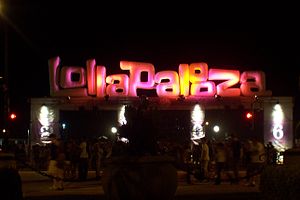
Lollapalooza Deal Puts Nonprofit At Risk

Lollapalooza is one of the most popular music festivals in the world but it's making one Chicago, Ill.-based nonprofit sing the blues.

The Washington Post reported today that a deal struck with Lollapalooza promoters has put the future of the Chicago Park District's nonprofit arm, the Parkways Foundation, at risk. The foundation  received 45 percent of its revenue from Lollapalooza. This stands to change after C3 Presents, the Austin, Tex.-based promoter of the festival, agreed for the first time to pay annual city and county amusement taxes and liquor taxes. The new deal also extends the festival's stay in Chicago's Grant Park through 2021. The Foundation's second largest contributions come in the form of grants and donations from private corporations such as the Kraft Foods Foundation.

At past festivals, C3 would make contributions to the Parkways Foundation in lieu of taxes. Now that they have agreed to pay these taxes, those contributions will no longer exist. The loss of this significant revenue caused the nonprofit to discuss its options. One of those options, according to The Washington Post, is whether the organization should continue to exist.

The Parkways Foundation took in $2.6 million from Lollapalooza last year, but it also experience significant loss of personnel. Ten people have left the board since 2010, and longtime executive director Brenda Palm left in December. Jay Terry has filled that position since her departure.

Lollapalooza, which has included groups from Nine Inch Nails to Kanye West, has made its home in Chicago since 2005. It was originally formed in 1991 by Jane's Addiction singer Perry Farrell as a farewell tour for his band.

You can read the full article in The Washington Post.

Tuesday, February 21, 2012

NY Mardi Gras Celebrations To Benefit Nonprofits

Today's Mardi Gras celebrations won't be limited just to New Orleans.  Although the events in the Big Easy will get most of the attention, cities across the country will be holding their own celebrations.  At one such event in Buffalo, N.Y., some nonprofits will be the recipients of much more than beads.

The Buffalo Business First reported today that the city's 17th annual Artvoice Mardi Gras celebration will be expanded this year.  Events will take place from Buffalo all the way to Southtowns, with money from each celebration going to individual nonprofits.  The money will come from the sale of $5 bracelets, which get attendees into participating establishments.  Some 46 restaurants and bars will be involved in the festivities this year.

One organization that benefited from last year's celebration is Give for Greatness.  The organization was only a campaign last year, but Artvoice helped transform it into a full-fledged nonprofit with 57 beneficiaries (up from 48 last year).  Mardi Gras activities in four Buffalo-area nonprofits will support Give for Greatness this year.

The charitable giving for Give for Greatness doesn't end with the Mardi Gras celebrations.  Fundraising activities for the organization are expected to run through Cinco de Mayo.

You can read the full article in The Buffalo Business First.

Monday, February 13, 2012

Getting Out Of Komen's Shadow

Susan G. Komen for the Cure has been in the news a lot lately.  Their decision to discontinue grants to Planned Parenthood caused a national outrage, which eventually lead to a reversal of that decision.  Now that the fight is over, some smaller breast cancer nonprofits are trying to differentiate themselves from Komen.

While Komen was grabbing the headlines in recent weeks, Wendy McCoole wrote to her supporters and members.  She wanted to remind them that the work they were doing was just as important as Komen's, even if they didn't get nearly the amount of attention.  Now that the Planned Parenthood controversy is dying down, The Seacoast Online reported today that McCoole is working even harder to distance her nonprofit from Komen. 

McCoole, who founded Beast Cancer Stories and My Breast Cancer Support (both based in New Hampshire), is gearing up for the fourth annual CelebratePink 5K Road Race and Walk in September.  The race is one of the biggest fundraising sources for the two organizations, but it occurs just four months after Komen's own event: the first annual New Hampshire Race for the Cure.

McCoole said she has already been asked a lot if the two races are different, so she is spreading the word to make sure people know the two races are separate.  This starts by educating the public about all the money that goes to her organization from the race.  The CelebratePink Race represents 25 percent of the nonprofit's $100,000 annual budget for breast cancer support services at six hospitals in the Seacoast region of Maine and New Hampshire.  While she says that Komen has always been supportive of her work, she acknowledged to The Seacoast Online that it's sometimes frustrating being in the shadows of such a large organization.

So far there is a lot of optimism that the race will experience an increase from the 700 participants last year.  You can read more about this story in The Seacoast Online.

Thursday, February 9, 2012

Linking Special Events To A Mission

Many nonprofit leaders like to hold special events because they can raise money without talking about raising money.  But according to Jeff Shuck, president and CEO of Event 360, that's exactly the wrong approach to take.

At a recent DMA Nonprofit Federation New York Nonprofit Conference, Shuck said nonprofits should use events as an opportunity to spark fundraising conversations, not to avoid them.  He went on to say that these conversations can get the best results when nonprofits understand how to evaluate each part of an event with the correct metrics.  These include the following:
  • Event: Number of events, participant satisfaction, repeat attendance.
  • Participants: Number of participants, registration time, team participation.
  • Donors: Number of donors, donors per participant, percentage of participants with zero donors, percentage of self-donations and goal, number of emails sent per participant.
  • Gifts: Number of gifts, amount per gift.
  • Revenue: Return on investment (ROI), compound annual growth rate, growth against the national benchmark.