A new survey revealed that the demand for nonprofit services is very high, but that many of these organizations simply don't have enough cash on hand to meet the needs of the people.
More than 4,500 nonprofits gave responses to the State of the Nonprofit Survey, as reported by The Huffington Post. The survey indicated that while nonprofits expect to see an 88 percent increase in demand for services in 2012, 57 percent only have enough cash on hand for three months or less.
While there are a number of reasons for this, the main issue is a decrease in government funding. The economic troubles the country endured has lead to cuts at the state and federal level, which have often targeted nonprofit funding.
The Huffington Post reported that one nonprofit that is experiencing these troubles is Worcester, Mass.-based Abby's House, which provides shelter and other support to homeless women and children. The length of stay has increased from 11 nights to 33 in the past year, and the charity has been scrambling to come up with solutions to house the individuals that need shelter.
You can read the full story in The Huffington Post. If you want even more reading on this topic, check out our recently published column about how much cash nonprofits should keep in reserve.
Wednesday, April 4, 2012
Tuesday, April 3, 2012
NPT At NTC12
This post will be updated throughout the day
***
The NonProfit Times is attending the Nonprofit Technology Network's (NTEN) annual conference, NTC. The event is being held in beautiful San Francisco, California this year, and our senior editor, Mark Hrywna, is tweeting about the latest happenings at the show:
***
The NonProfit Times is attending the Nonprofit Technology Network's (NTEN) annual conference, NTC. The event is being held in beautiful San Francisco, California this year, and our senior editor, Mark Hrywna, is tweeting about the latest happenings at the show:
18k pieces of content on @EnvDefenseFund website when redesigned. "Not just pile of clutter, wrong clutter" - @kiramarch #12ntcredesign
— Mark Hrywna (@mhrywna) April 3, 2012
Was v program related, wonky blog posts, nothing to convince ppl to give. Needed human, bit-sized pieces of info -@kiramarch #12ntcredesign
— Mark Hrywna (@mhrywna) April 3, 2012
User personas help set goals for website's site navigation, what info has hierarchy 'above the fold' - @farra #12ntcredesign
— Mark Hrywna (@mhrywna) April 3, 2012
Time to rethink ur website? Try this flowchart from @bigduck's @farra --> ow.ly/a3B3J #12ntcredesign
— Mark Hrywna (@mhrywna) April 3, 2012
Avg cost to acq #FB like = $3.5; Twitter follower = $2.05, accding to 4th annual #Nonprofit Social Network Benchmark Report #12ntc
— Mark Hrywna (@mhrywna) April 3, 2012
Most of us don’t need completely diff website for smartphone yet; might be depending on audience, goals -@farra #12ntcredesign
— Mark Hrywna (@mhrywna) April 3, 2012
87% of all US adults have cell phone, 66% 18-29 yos have smartphone (fr Pew research) #12ntcmobileprograms
— Mark Hrywna (@mhrywna) April 3, 2012


Featured Job: Manager Of Individual Giving

Geneva, Ill.-based Marklund, a nonprofit serving the healthcare needs of disabled Americans, is seeking a Manager of Individual Giving. The chosen candidate should be prepared to work in a fast-paced environment where he/she will oversee all aspects of direct mail fundraising and appeals. Using various mediums including mailings and e-blasts, the Manager will seek to expand the lower-level annual giving program (gifts up to $5,000).
Reporting to Marklund's Chief Development Officer, other responsibilities of this position include:
- Identify, cultivate, and solicit current and prospective donors.
- Thank and recognize donors.
- Enlarge the donor base in terms of number of donors and dollars raised.
Think you have what it takes for this job? Make sure you meet the following requirements before applying:
- Bachelor's Degree in nonprofit management, marketing, business management, communications, or another related field.
- At least six years of progressively responsible experience in annual fund and donor engagement in the nonprofit sector.
- Ability to manage multiple projects and work independently, with a strong attention to detail.
- Excellent written and verbal communication skills.
- Strong proficiency with donor database function and navigation.
- Familiarity with Microsoft Office programs, including Microsoft Word and Excel.
- Experience working with direct mail and e-mail vendors and printers.
Read more about this job, including more requirements, on our website. If you think you would be a good fit, don't hesitate to apply!
Monday, April 2, 2012
The NonProfit TImes' 25th Anniversary Issue
The first full week of the month always means a new issue of The NonProfit Times, but this one is a little different. Yes, this year's April 1 edition of NPT is our 25th Anniversary issue. We are celebrating 25 years of delivering high quality nonprofit news with a special commemorative article looking back at the past years, both the highs and the lows.
Oh, and we also have the Top 50 Best Nonprofits To Work For in this issue. So you could say this is a pretty packed issue.
Articles:
- NPT Celebrates 25 Years: As NPT embarks on its 26th year of publishing, we take a look back at some of the biggest stories we've covered.
- 50 Best Nonprofits To Work For In 2012: What nonprofits were the best to work for this year? NPT conducts it's annual study of the best nonprofits, led for the second consecutive year by the Wounded Warrior Project.
- Credit Card Scams Targeting College Online Donations: From California to Pennsylvania, from Wisconsin to Washington, colleges around the country were getting large online donations that turned out to be nothing more than credit card scams.
Columns:
- Failing Grade: Is the nonprofit sector focused on education's real future?
- Just Like Kindergarten: Learning to share donor information is beneficial.
Thursday, March 29, 2012
Tea Party Group Ruled A PAC, Not Nonprofit
A Texas judge ruled that a Tea Party group is not a nonprofit as it claims but an unregistered political action committee (PAC).
Judge John Dietz of the Travis County District Court made his ruling based on a lawsuit the Texas Democratic Party filed against the King Street Patriots in 2010, according The Houston Chronicle. The suit alleged the organization made illegal contributions to the Republican Party and trained poll-watchers in cooperation with GOP candidates.
All of these actions would violate laws governing nonprofit political groups, which is what the King Street Patriots claimed they were. The organization was founded in 2009 with one of its main issues being voter fraud. The group reviewed public information of voter registration during the 2010 elections, and reported those findings to the county registrar. They also trained hundreds of poll watchers to look for potential fraud.
The ruling would force the King Street Patriots to reveal its list of funders. They would, however, be allowed to participate in partisan activities. The Liberty Institute, a nonprofit legal firm based in Plano, Tex. that represents the King Street Patriots, says they plan to appeal the Judge's ruling.
The NonProfit Times recently published a story on how the IRS is monitoring political groups like the King Street Patriots to see if they are adhering to rules governing nonprofits.
You can read the full story in The Houston Chronicle.
Nonprofit Director Sentenced In Child Porn Case
The founder and former director of a San Francisco, Calif.-based nonprofit was sentenced to six years in prison for possession of child porn. He will begin serving his sentence on May 8.
Anthony Josef Morris, who was the head of Kids Serve Youth Murals, was also ordered to pay $6,500 in restitution by U.S. District Judge Richard Seeborg, according to Mill Valley Patch. That money will be distributed among the victims identified in Norris's collection. He pleaded guilty in November to one count of possession of child pornography.
U.S. Attorney Melinda Haag said that during his plea, Norris admitted to possessing more than 600 images on his computer of kids engaging in sexual acts with adults. These included horrific images of children being subjected to sexual assault. Norris was arrested in June of last year, in a story that was reported by NPTtv, after FBI agents discovered he had posted some of his images online. Those postings were then traced back to Norris's home computer.
Even more disturbing, San Francisco United School District officials said they found other offensive images hidden in tiles in at least three of the murals his organization created for schools and other sites across the city. Those images were quickly removed by the school district.
You can read the full story in Mill Valley Patch.
Wednesday, March 28, 2012
Blackbaud Interview With Paul Clolery
Found this video on YouTube. It's an interview with our editor-in-chief, Paul Clolery, at the 2009 Blackbaud Conference on Nonprofits. Enjoy!
Planning For Planned Giving

Planning for planned giving is a very sensitive task for donors. What they leave behind for others is a big decision that shouldn't be taken likely. A nonprofit might be anxious to know if they are receiving a bequest ahead of time but, according to representatives from The Stelter Company, that isn't always the case.
The representatives shared their findings on this subject at a recent Association for Healthcare Philanthropy (AHP) international conference. The results of their study showed that a whopping 53 percent of those polled said they prefer that an organization find out about a bequest when the time comes. Another 5 percent said they intend to notify the organization at some point.
A bequest is a very personal decision and donors don't necessarily want their decisions to be private until the time comes. Stelter urged nonprofits to respect the privacy of donors and to assure them they have a right to change their minds. They also listed the reasons why donors choose not to notify nonprofits ahead of time:
- It’s the donor’s own business, and no one else needs to know: 80 percent.
- The donor might have a change of heart, so it’s better not to say anything: 34 percent.
- Worries about being pestered with mailings and phone calls if the nonprofit knew about the bequest: 26 percent.
- A sense of the nonprofit looming like a vulture waiting for the money: 26 percent.
- A fear of getting special treatment, which would make the donor feel uncomfortable: 24 percent.
- Fear the organization would sell/give the information to other nonprofits that would also approach the donor: 19 percent.
Bequest giving is a big source of revenue for nonprofits, which makes it even more important that nonprofits respect the wishes of these donors. Failing to do so will likely result in the loss of the bequest and bad publicity.
Tuesday, March 27, 2012
An Increase In The Need For Nonprofit Services?
The NonProfit Times reported today that, according to the Internal Revenue Service (IRS), the amount of nonprofits in the U.S. decreased by 18 percent last year. As you probably know very well, a lot of people rely on nonprofits for affordable services, especially in this tough economy.
This news made us wonder whether nonprofits have noticed an increase in demand for their services during the past year. We went to Twitter to find out, and were given the following responses from our followers:
What are your thoughts on this issue? Tweet at us @nonprofittimes or respond in the comments section below. We will update this post with new tweets from our followers.
This news made us wonder whether nonprofits have noticed an increase in demand for their services during the past year. We went to Twitter to find out, and were given the following responses from our followers:
@NonProfitTimes As the economy worsens, the need for services increases. We have been fortunate through these hard times. Hope it continues
— Ctr for Child&Family (@centerforchild) March 27, 2012
@NonProfitTimes Our ToolBanks are seeing their user-ship rise as NPOs use a ToolBank to make more efficient use of service project budgets.
— ToolBank USA (@ToolBankUSA) March 27, 2012
What are your thoughts on this issue? Tweet at us @nonprofittimes or respond in the comments section below. We will update this post with new tweets from our followers.
Monday, March 26, 2012
Exempt Magazine: Winter 2012 Issue
One of the perks of the new Exempt web site is the ability to check out past and current editions of the magazine. This includes the Winter 2012 issue, which came out last month.
If you are new to Exempt, you should note that the magazine focuses exclusively on issues related to the financial side of the nonprofit sector. This is different from The NonProfit Times, which writes mostly about management and fundraising issues.
This attention to finance is shown very well in the Winter 2012 issue. Let's take a look at what's inside:
Articles
- Of Pay And Perks: A look at some of the salary and benefits practices at some nonprofits, including the United Way of Rock River Valley. This article is based on NPT's 2011 Salary and Benefits Report.
- Return On Investment: Looking to invest in public companies that service nonprofits? This article takes a look at some of the organizations that did well in 2011.
- Prospect Wealth: When the $200 million Reed College Centennial Campaign began five years ago, the school turned to donor prospect research to help identify alumni and college friends who might be able to make a major gift.
- In The Crosshairs: The New York Attorney General (NYAG) recently crossed into what some consider the hallowed ground of charities, by launching an investigation into cause-related marketing of “pink ribbon” charities.
Column:
- Accounting Software: Why is accounting software so important? Find out in this column by Tim Mills-Groninger, a consultant to the federal department of Homeland Security Science and Technology Directorate.
New Exempt Magazine Web Site Online
Seven years ago, the first issue of The NonProfit Times' sister issue, Exempt Magazine, was launched. The magazine covered the financial aspects of the nonprofit sector, in comparison to the management and fundraising focus of NPT.
We're happy to announce the launch of the re-designed Exempt Magazine web site. Just as we overhauled NPT's web site last year, Exempt has now received the same treatment. Users will now be able to easily find past issues of Exempt, as well as exclusive online content from the Exempt eNewsletter.
Please check out the new site and let us know what you think. We hope that you enjoy it!
Friday, March 23, 2012
Nonprofit To Bring North Korean Orchestra To U.S.
In what would represent a significant diplomatic development, an Atlanta, Ga.-based nonprofit is planning to bring North Korea's national orchestra for a tour of the U.S.
The Associated Press (AP) reported that the North Korean Symphony Orchestra will start the tour with a concert in Atlanta, the home of Global Resource Service (GRS), a humanitarian nonprofit that works in the secluded country. GRS hopes the concert will begin in the spring, but details, including government approval, are still left to be resolved.
The deal comes at a time when relations between the U.S. and North Korea are warming, but still fragile. The country's long time leader, Kim Jong Il, died in December, which created hope among some aid groups that relations would improve. This seemed to be confirmed when North Korea agreed last month to stop its nuclear activities and allow U.N. inspections to resume in exchange for food aid. However, recent plans by the country to launch a satellite have renewed tensions.
You can read the full article in the AP.
Thursday, March 22, 2012
Group Behind Controversial Calendar Shuts Down
A Denver, Co.-based organization has agreed to cease its operations after reaching a settlement with the state over whether the group was really a nonprofit.
Fired Up For Kids would transfer all of its assets to a new group, according to a report on TheDenverChannel.com. The group got in hot water with Colorado's Office of the Attorney General over its sale of firefighter calendars. It's website stated that all proceeds from the calendars would go to The Children's Hospital Burn Center, and it's pamphlets presented Fired Up For Kids as a nonprofit.
The Attorney General's office saw things much differently.
In December 2011, the state filed a lawsuit against Fired Up For Kids alleging the group operated as a for-profit business despite the fact that it had registered as a nonprofit. Prosecutors also accused the organization's owner, Kirsten Hamling, of using company accounts and assets for personal uses, including airline tickets and gym memberships. Hamling defended herself after the lawsuit was fired, saying that the donations to the hospital were voluntary and that she was "in no way contractually obligated" to give money to the hospital.
In the end, it appears Hamling decided it was a better course to settle rather than fight the lawsuit.
Assets for the now dissolved Fired Up For Kids will go to a new organization, Colorado Firefighter Calendar, Inc. Proceeds from the calendar will still go to the Children's Hospital Burn Center, in addition to promoting fire safety and awareness.
You can read the full story on TheDenverChannel.com.
Activities Excluded From UBIT
As a nonprofit manager, you've probably heard of the term unrelated business income tax (UBIT) and, chances are, you aren't too fond of it. We have some good news for you: There are plenty of activities that are excluded from UBIT!
Here's a quick recap of the rule: According to Marci Thomas, CPA, MHA, and Kim Strom-Gottfried, Ph.D. in their book "The Best of Boards," UBIT applies to any income from a trade or business that is carried on regularly by a nonprofit when the purpose of the activity is not related to the mission. Even if the net proceeds from the activity will be used to further the nonprofit’s mission, it is still subject to UBIT.
Now on to the good news. There are at least five activities that are excluded from UBI taxes. Thomas and Strom-Gottfried list them as:
- Volunteer work force. If the activity is conducted with volunteers, then the income is not UBI even if the business is regularly carried on and not related to the organization’s tax-exempt purpose.
- Convenience of members. If the activity is operated for the convenience of members, students, patients, officers, or employees it is not UBI.
- Sponsorship payments. When a nonprofit receives a payment from a sponsor and the only benefit the sponsor gets is the inclusion of his or her company’s name or logo or use of products.
- Selling donated merchandise. When substantially all of the merchandise being sold in a business activity is donated.
- Telephone Pole rental. Pole rentals are not considered unrelated trade or business when rented by a mutual or cooperative telephone or electric company described in section 501(c) (12).
Wednesday, March 21, 2012
Lollapalooza Deal Puts Nonprofit At Risk
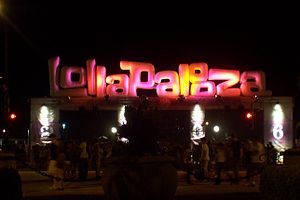
The Washington Post reported today that a deal struck with Lollapalooza promoters has put the future of the Chicago Park District's nonprofit arm, the Parkways Foundation, at risk. The foundation received 45 percent of its revenue from Lollapalooza. This stands to change after C3 Presents, the Austin, Tex.-based promoter of the festival, agreed for the first time to pay annual city and county amusement taxes and liquor taxes. The new deal also extends the festival's stay in Chicago's Grant Park through 2021. The Foundation's second largest contributions come in the form of grants and donations from private corporations such as the Kraft Foods Foundation.
At past festivals, C3 would make contributions to the Parkways Foundation in lieu of taxes. Now that they have agreed to pay these taxes, those contributions will no longer exist. The loss of this significant revenue caused the nonprofit to discuss its options. One of those options, according to The Washington Post, is whether the organization should continue to exist.
The Parkways Foundation took in $2.6 million from Lollapalooza last year, but it also experience significant loss of personnel. Ten people have left the board since 2010, and longtime executive director Brenda Palm left in December. Jay Terry has filled that position since her departure.
Lollapalooza, which has included groups from Nine Inch Nails to Kanye West, has made its home in Chicago since 2005. It was originally formed in 1991 by Jane's Addiction singer Perry Farrell as a farewell tour for his band.
You can read the full article in The Washington Post.
Former Nonprofit Exec Dies After Indictment
A former chief financial officer (CFO) of an Austin, Tex.-based nonprofit died only days after she was indicted for theft.
According to The American-Statesman, Mary Ann Hernandez, 58, was charged with funneling more than $100,000 from Austin Resource Center for Independent Living Inc (ARCIL) to her personal credit card accounts from 2005 to 2009. She was arrested hours after her indictment on March 1 and was released after posting $250,000 bail. Authorities said she died on March 6. The cause of her death is unknown pending the results of an autopsy.
The indictment charged Hernandez of two felonies: One count of misapplication of fiduciary property with a value of $100,000 or more but less than $200,000 and another count of theft of $200,000 or more but less than $100,000. These all stemmed from accusations that, between March 2, 2005, and Jan. 30, 2009, she allegedly transferred checks from ARCIL's Bank of America account to make payments on her Visa credit card accounts.
The investigation of Hernandez started after the state auditor's office was contacted by the Department of Housing and Community Affairs, which had contracted with ACRIL from 2005 to 2009 to provide rental assistance to disabled people. The accusations against Hernandez were also reported in an earlier edition of NPTtv.
With their only suspect now gone, prosecutors are discussing whether to dismiss the case. Jason Knutson, an assistant district attorney with the state's Public Integrity Unit, told The American-Statesman that she was in charge of all the money as CFO, so they have no reason to believe anybody else was involved.
You can read the full story in The American-Statesman.
Tuesday, March 20, 2012
Nonprofit Recruiting Tips
Nonprofits have plenty of options when choosing where to recruit new employees. The most popular choice these days is online job boards.
Most employers choose to use the Internet for their recruiting because it's easier and it allows them to reach a wider audience. With the rising popularity of social networks, recruiters have even more tools at their disposal. While the Internet is definitely a great tool to use, it's important to remember there are other options at your disposal.
In their book "The Big Book of HR," Barbara Mitchell and Cornelia Gamlem remind nonprofits of the following recruiting methods to use in addition to the Internet:
- Former Employees: Employees don't always leave their former workplaces on bad terms. If your organization has a good exit interview process, you should be able to determine which individuals left amicably, and whether you would want to bring them back.
- Retirees: It is becoming increasingly difficult for retirees to live without some income. Consider bringing some of these individuals back to do special projects.
- Radio/TV Ads: If you have enough room in your budget, take out an ad on the radio or TV to invite job seekers to your career website.
- State Employment Offices: All states have offices where you can list open positions. These agencies do a great job of linking job seekers to open positions, so don’t discount the amount of help you can get from them.
Community Garden Looks For Life After Nonprofit Funding

C-Ville reported today that the Urban Agricultural Collective of Charlottesville (UACC) had to learn quickly about the finer arts of fundraising and budget management after it lost the funding of Quality Community Council (QCC) during the fall of 2011. The nonprofit ultimately decided the farm was successful enough to stand on its own after five years of funding.
The farm's project director, Todd Neimeier, quickly formed an advisory board of community members to help determine the farm's next step. That turned out to be a partnership with Virginia Organizing, a nonprofit that serves as a fiscal agent for around 40 groups in the state. The partnership will result in the organization accepting grants and donations on behalf of the UCC. This will allow the farm to focus on its mission without having to worry about the financial aspects.
Neimeier is not just relying on the help of Virginia Organizing. UACC started a grassroots fundraising campaign to get donations from individuals in the community. The farm will also receive one final act of good will from QCC. In exchange for UACC helping out with some deliverables, the nonprofit will assist with funding for this year's budget. Neimeier told C-Ville this was a "lifesaver" for the farm which he hopes will carry it through a good portion of the year.
You can read the full story in C-Ville.
Monday, March 19, 2012
Some Nonprofits Drowning In Water Fees
Nonprofits don't pay property taxes but, as The NonProfit Times explained, they often end up paying money to the government anyway. This come in the form of payments in lieu of taxes (PILOTs).
Newsmax reported today on one such PILOT that is being debated in an Oregon court. Some cities are starting to charge nonprofits and churches double for their water bills. This is the case in Canyonville, Ore., where a city ordinance states that nonprofits, churches, and schools will be charged this amount in lieu of taxes. The city of Canyonville boasts that its residents pay less for water than neighboring towns.
Canyonville Christian Academy (CCA), established in 1924, told Newsmax that the extra charges for water date back nearly 30 years, totaling about $200,000. The law is written to cover all nonprofits that use water, but CCA believes that the regulations targeted 10 churches and four Christian schools. CCA informed the school of what they considered to be improper billing in June, but they said nothing was done to solve the problem. The school offered to resolved the issue on Oct. 19, 2011 by taking a small amount of the surcharges of the last six years in the form of credits on future bills. That offer was rejected.
Believing the law to be unconstitutional, CCA appealed to the Douglas County Circuit Court in Roseburg, Ore. to give a ruling on the matter. If the court rules in the school's favor, it could potentially trigger similar lawsuits in the future.
You can read the full story in Newsmax.
Oregon Nonprofit Could Help School's Turf
Two Millard, Neb. high schools are reaching out to boosters and donors to get the aid of a Salem, Ore.-based nonprofit that would help fund the cost of artificial turf for their fields.
The Omaha World-Herald reported today that the nonprofit, the Community Sports Development Council (CSDC), has been involved with a number of development projects for sports facilities and parks. It also uses the same material used in artificial turf in the locality of Millard North and Millard West High Schools, which are both trying to get turf fields.
The agreement with CSDC calls for $350,000, and the schools got a big initial boost when they received $50,000 from the Millard Public Schools Foundation, which is contingent on the two schools raising the rest of the money. All donations would go through an account set up with the nonprofit Mustang Booster Club, which will make them tax deductible. The cost of the project for each school would be more than $1 million, though CSDC has agreed to cover $700,000 of that. The deadline to raise the money is April 13.
Chad Zimmerman, assistant principal and athletic director at Millard North, told The Omaha World-Herald that he is optimistic they will meet their fundraising goal. His school has already received interest from potential donors: A baseball group has pledged a "substantial" amount of money, while a donor with ties to a football program is willing to match all donations.
The help from CSDC was needed because a $140.8 million bond issue was rejected by the city last November. One in four residents who voted against it did so because they were opposed to turf fields, according to The Omaha World-Herald. The bond issue, which was voted down 57 to 43 percent, would have funded school repairs, classroom additions, and technology and security upgrades in addition to the turf field, which accounted for 2 percent of the bond.
You can read the full story in The Omaha World-Herald.
Subscribe to:
Posts (Atom)